Lighter and more compact
Higher packaging efficiency means slimmer integration, cleaner frame design, and more flexibility for OEMs working around geometry and weight targets.

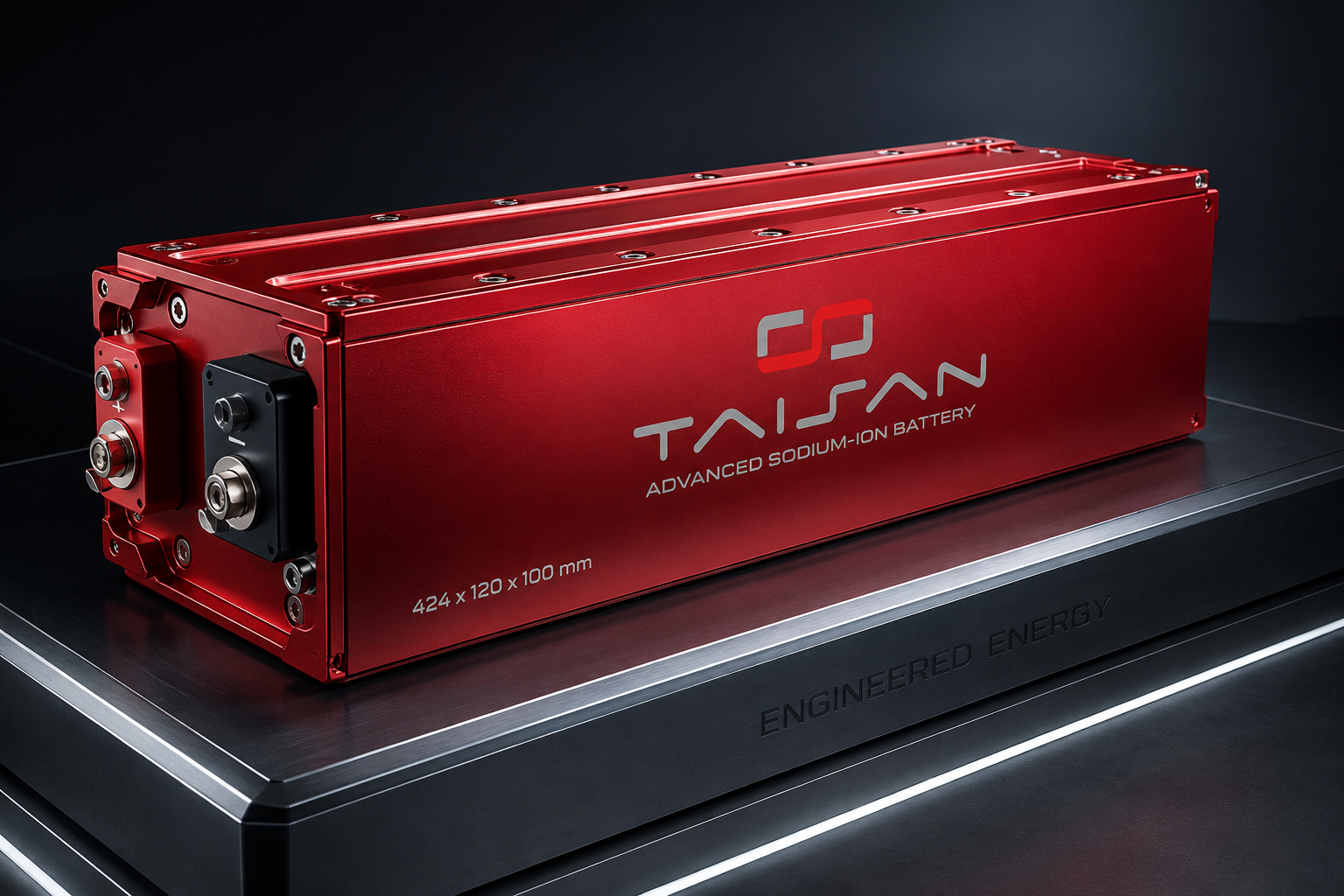
Sodium-ion battery packs engineered for e-bikes and scooters — lighter, safer, and cheaper — built on our own electrolyte and cell technology.
Cobalt-free · Lithium-free · Engineered in-house.
No lithium fire narrative hanging over the product.
Designed to keep working when winter hurts other packs.
Pack, cells, and chemistry engineered as one system.
No cobalt. No lithium bottleneck. No borrowed chemistry.
Lithium-ion packs power most of today's bikes and scooters — but they come with real costs: bulky packaging, thermal runaway risk, poor cold-weather performance, and dependence on scarce mined materials like cobalt and lithium.
We built TaiSan to fix this from the chemistry up.
A pack failure damages trust in the whole vehicle.
Range and power should not disappear with temperature.
Battery packaging should not dictate the entire vehicle.
Supply security matters as much as performance.
Most “sodium battery” sellers just assemble cells they buy from someone else. We don't. Our packs are built around our own electrolyte formulation and our own cell design — which means we control safety, performance, and quality at the level that actually matters.
When the chemistry is ours, the advantages are real and repeatable, not borrowed.
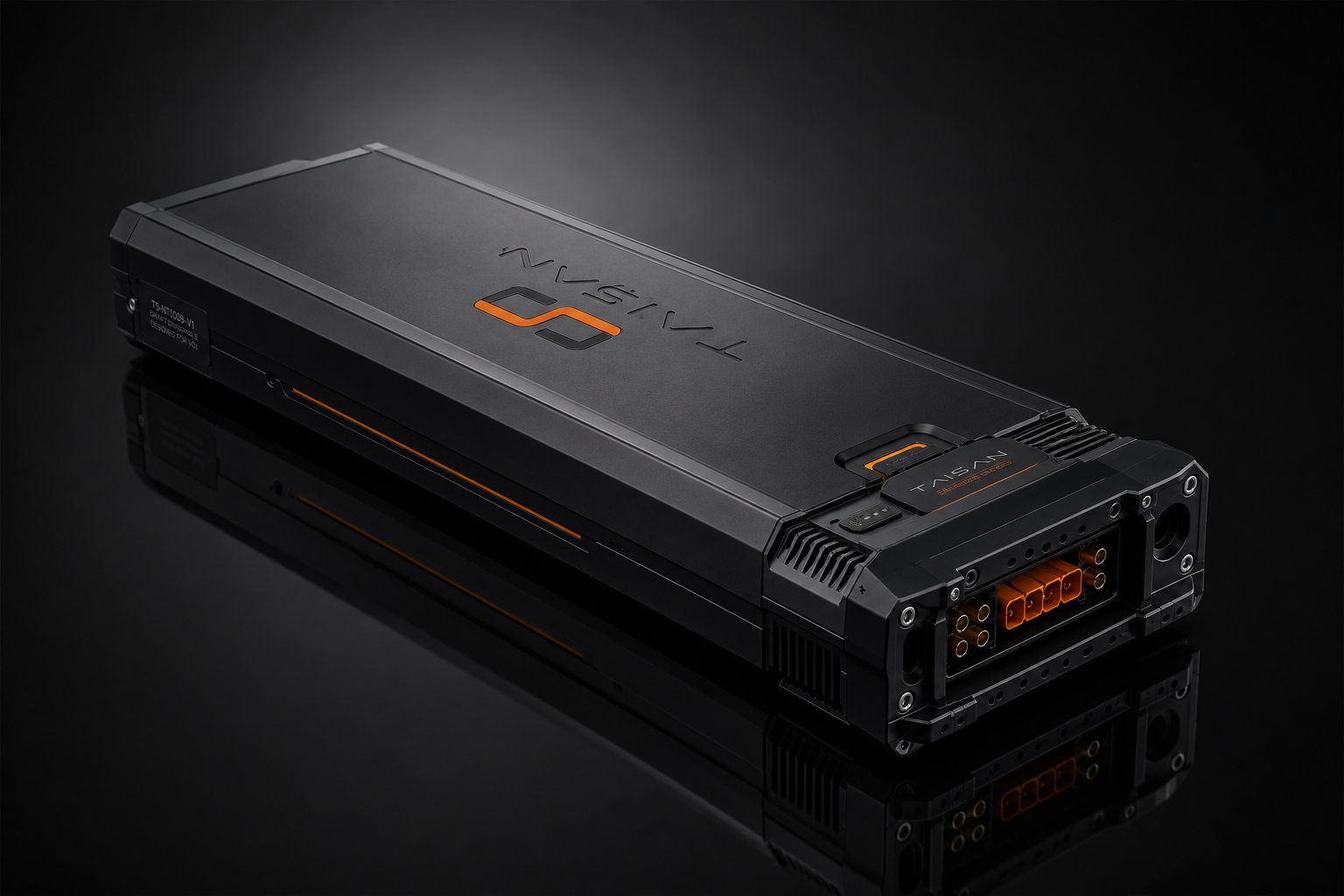
Higher packaging efficiency means slimmer integration, cleaner frame design, and more flexibility for OEMs working around geometry and weight targets.
Our sodium-ion chemistry is engineered to resist thermal runaway, reducing the failure risk that makes riders and manufacturers nervous with lithium packs.
Built without cobalt or lithium, using a chemistry based on more abundant raw materials and a less fragile global supply chain.
Designed for thousands of charge cycles so the pack stays useful for longer, lowers cost per kilometre, and fits fleet economics better.
Quick top-ups with a chemistry built to tolerate wider charge and discharge conditions without the same degradation anxiety.
We build standard-format packs for e-bikes and scooters, and we can also design custom packs or integrate our cells into your existing architecture.
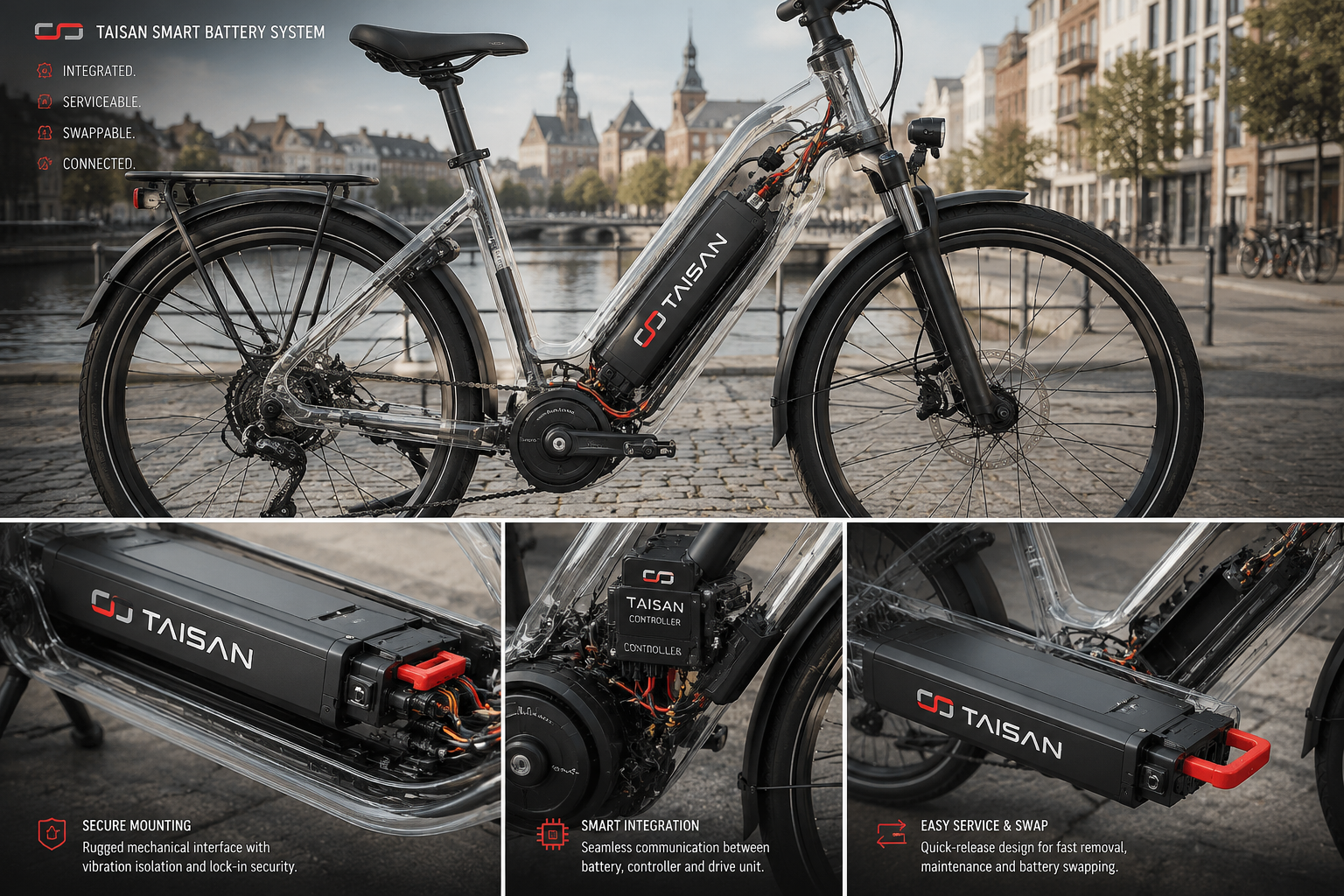
Designed for commuter, cargo, and trekking bikes with compatibility in mind across frame types, mounting standards, service access, and daily charging habits.
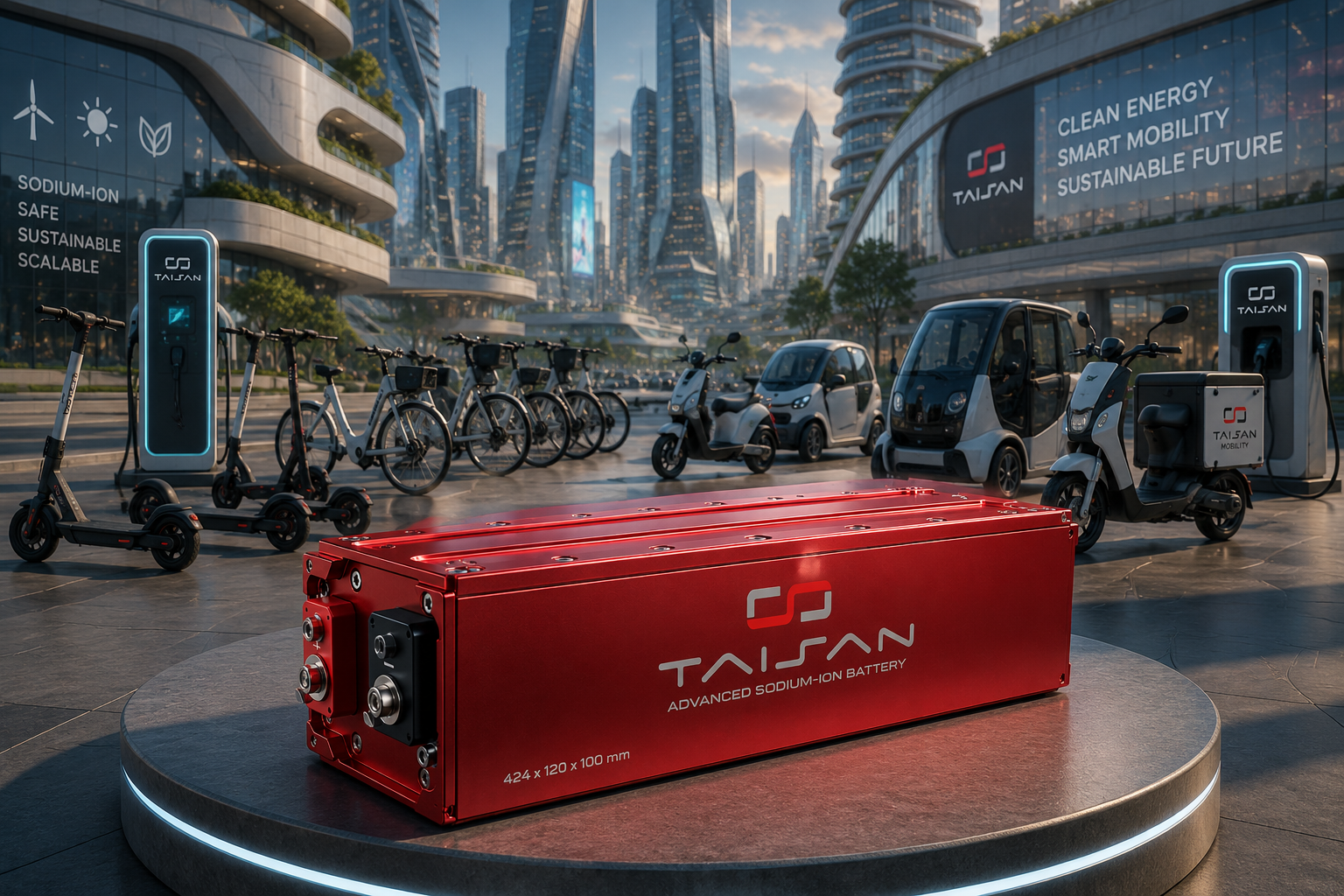
Engineered for daily urban range, tighter packaging envelopes, and balanced weight distribution so the vehicle rides better and stays easier to service.
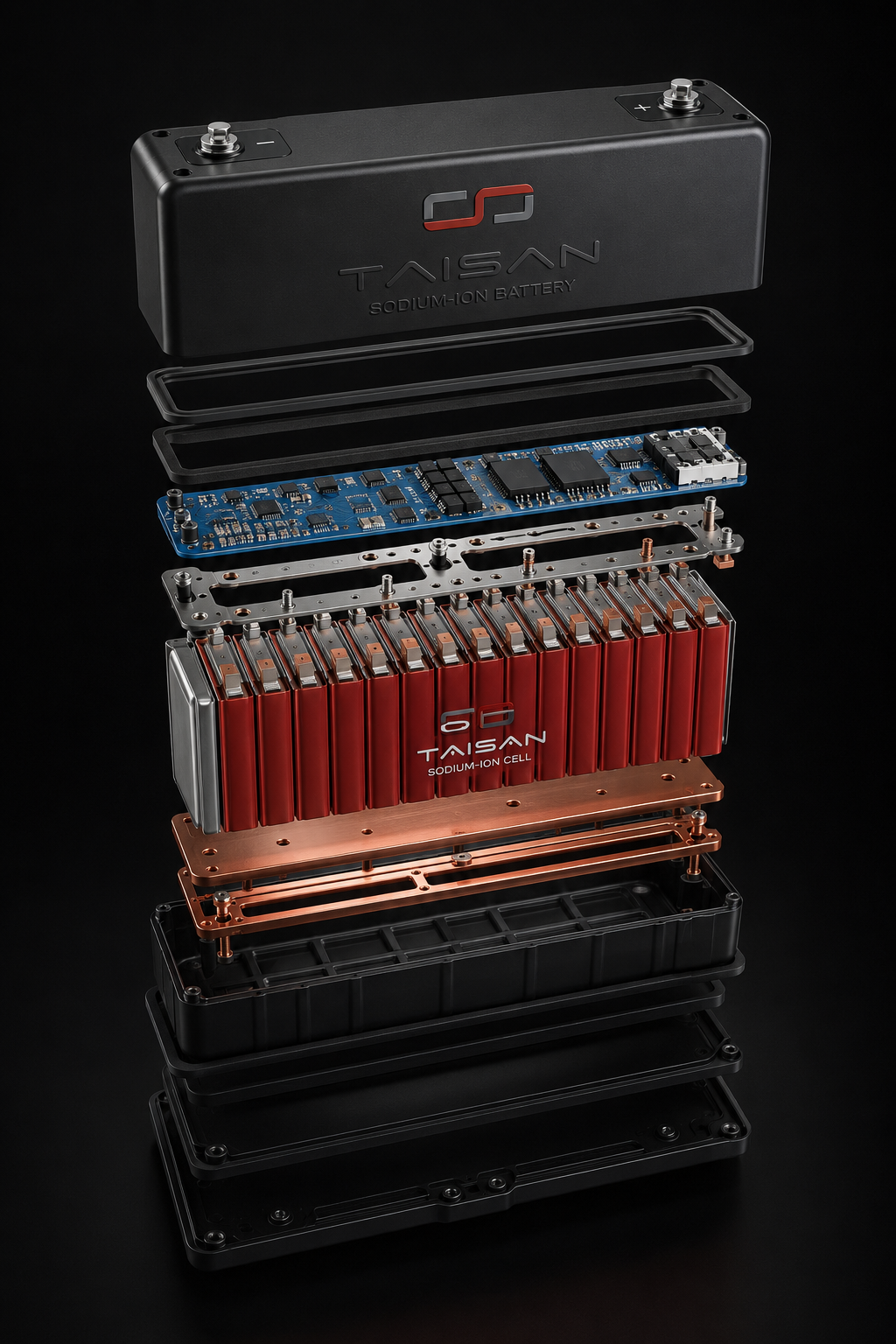
Optimised for stability, usable temperature range, and long service life — without giving away the IP that makes the chemistry worth owning.
Engineered around the form factors and performance envelope required by micromobility, rather than trying to force a generic cell into a better story.
Protection, balancing, state monitoring, and pack integration designed as one system so the chemistry, electronics, and enclosure work together.
Compliance planning is built into development to support OEM, fleet, and import customers who need credible transport and market-entry readiness.
Riders who want dependable range, simple charging, and peace of mind in apartments, offices, and shared spaces.
Operators who cannot afford downtime, cold-weather drop-off, or battery safety incidents across dozens or hundreds of vehicles.
OEM teams looking for a safer, more sustainable pack that differentiates the product instead of copying the same lithium stack.
Integrators who need maintainable, swappable, standards-aware packs that fit real field servicing and replacement workflows.
Sodium-ion gives us a stronger lifecycle story: abundant raw materials, no cobalt dependency, lower-pressure sourcing, and a long service life that can reduce total waste. Combined with a pack designed for maintainability and application-specific integration, the result is a battery with a more credible long-term environmental case.
Avoids one of the most ethically fraught battery materials.
Less exposed to the volatility of scarce-material supply chains.
More useful cycles means fewer replacements and less waste.
Pack architecture and chemistry choices support end-of-life planning.
If you're evaluating an early-stage platform, the proof you need is technical credibility, integration readiness, and a clear validation path — not borrowed logos.
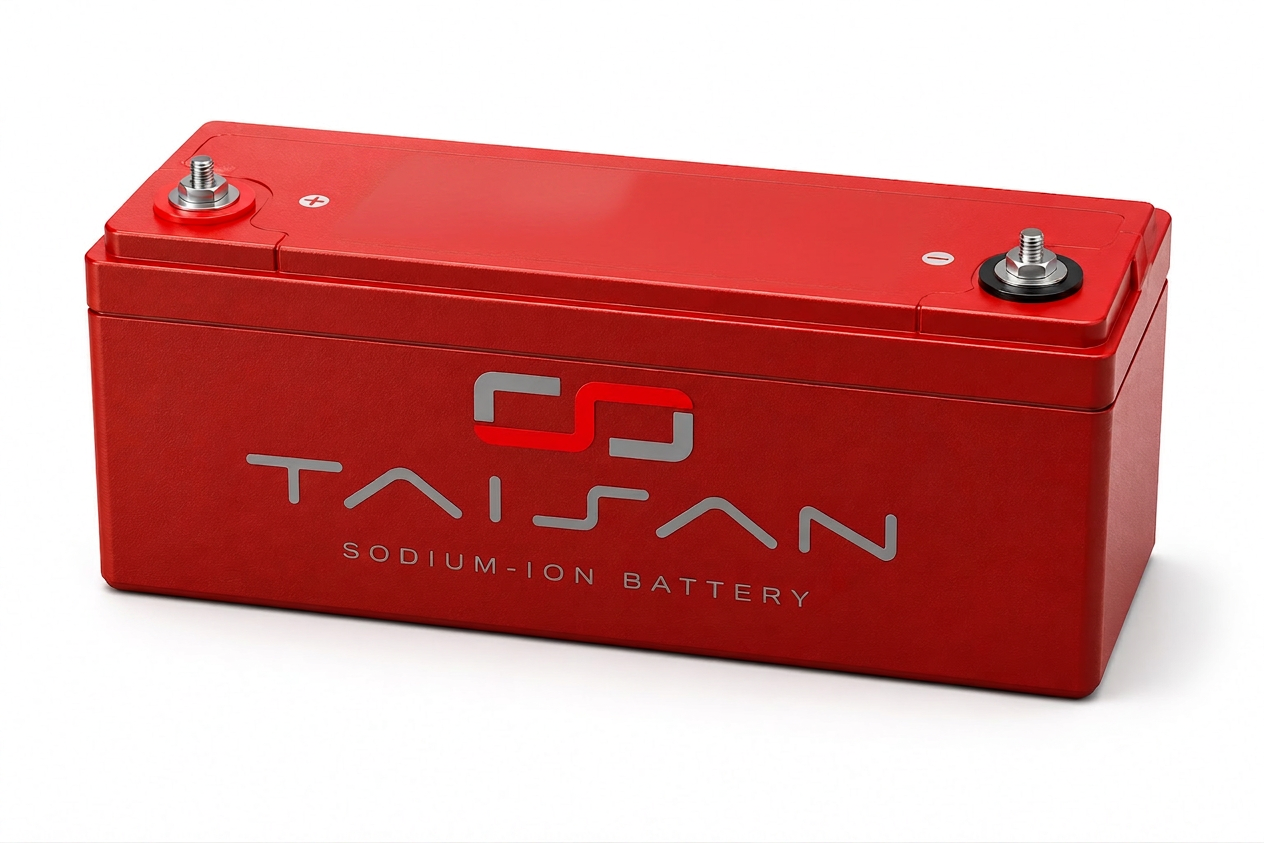
The pack story is backed by chemistry ownership, application-focused engineering, and buyer-relevant validation priorities from day one.
The pack story is backed by chemistry ownership, application-focused engineering, and buyer-relevant validation priorities from day one.
The pack story is backed by chemistry ownership, application-focused engineering, and buyer-relevant validation priorities from day one.
The pack story is backed by chemistry ownership, application-focused engineering, and buyer-relevant validation priorities from day one.
At low volume, pricing depends on pack format and integration requirements. At scale, sodium-ion benefits from abundant raw materials and a chemistry that is not tied to cobalt or lithium bottlenecks, improving long-term cost stability.
On the same vehicle, real-world range is expected to improve by roughly 20–25% compared with an equivalent lithium-ion pack, because our packs are lighter and more compact — the vehicle simply has less mass to move.
The pack is engineered for thousands of charge cycles, with longevity shaped by usage profile, charging pattern, and thermal environment. For fleet and OEM customers, we map service life against total cost of ownership.
No — our sodium-ion packs are lighter and more compact than comparable lithium-ion packs. Sodium chemistry is inherently safer, so it needs far fewer passive safety components than NMC, which means a smaller, lighter, more space-efficient pack at the system level.
In many cases, yes. We can design custom packs or integrate our cells into existing pack architectures, depending on voltage, mount, controller compatibility, and available space.
Certification planning is part of the engineering process from the start, including transport, pack compliance, and market-specific approval pathways required by OEM and import customers.
Warranty structure depends on the application, expected cycle profile, and whether the project is direct-to-rider, fleet, or OEM. We also support end-of-life planning through long service life, replaceable pack strategies, and recycling pathways.
Tell us about your bike, scooter, or fleet and we'll send a tailored recommendation and quote within one business day.
Get launch updates, range tips, and offers — and stay in the loop while you compare options.